Cat City
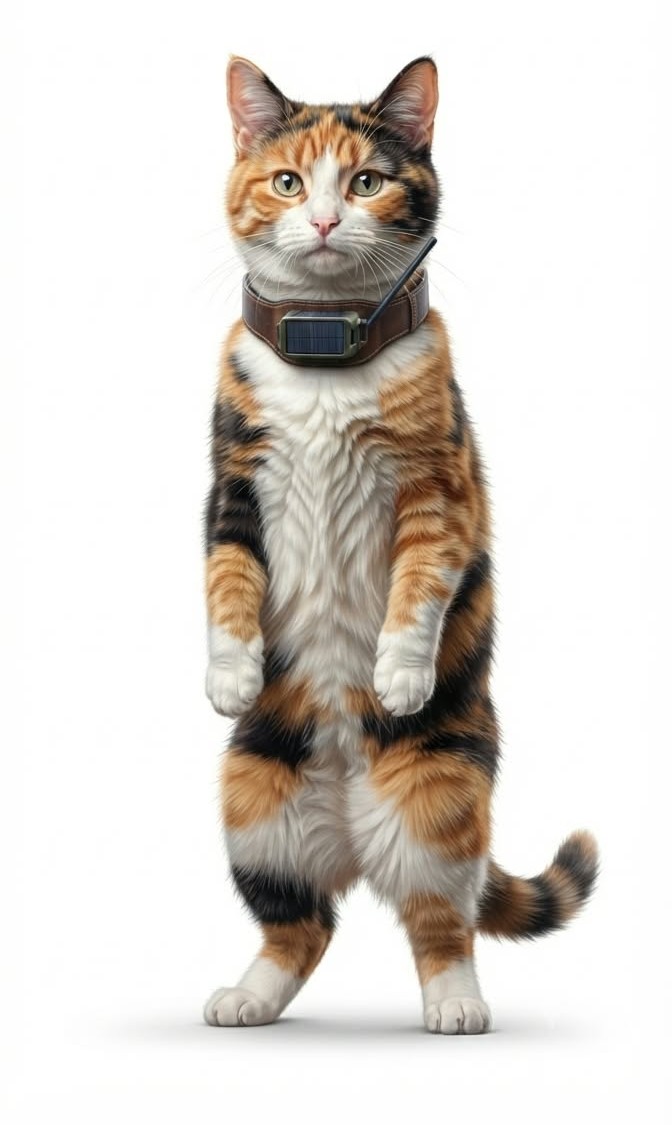
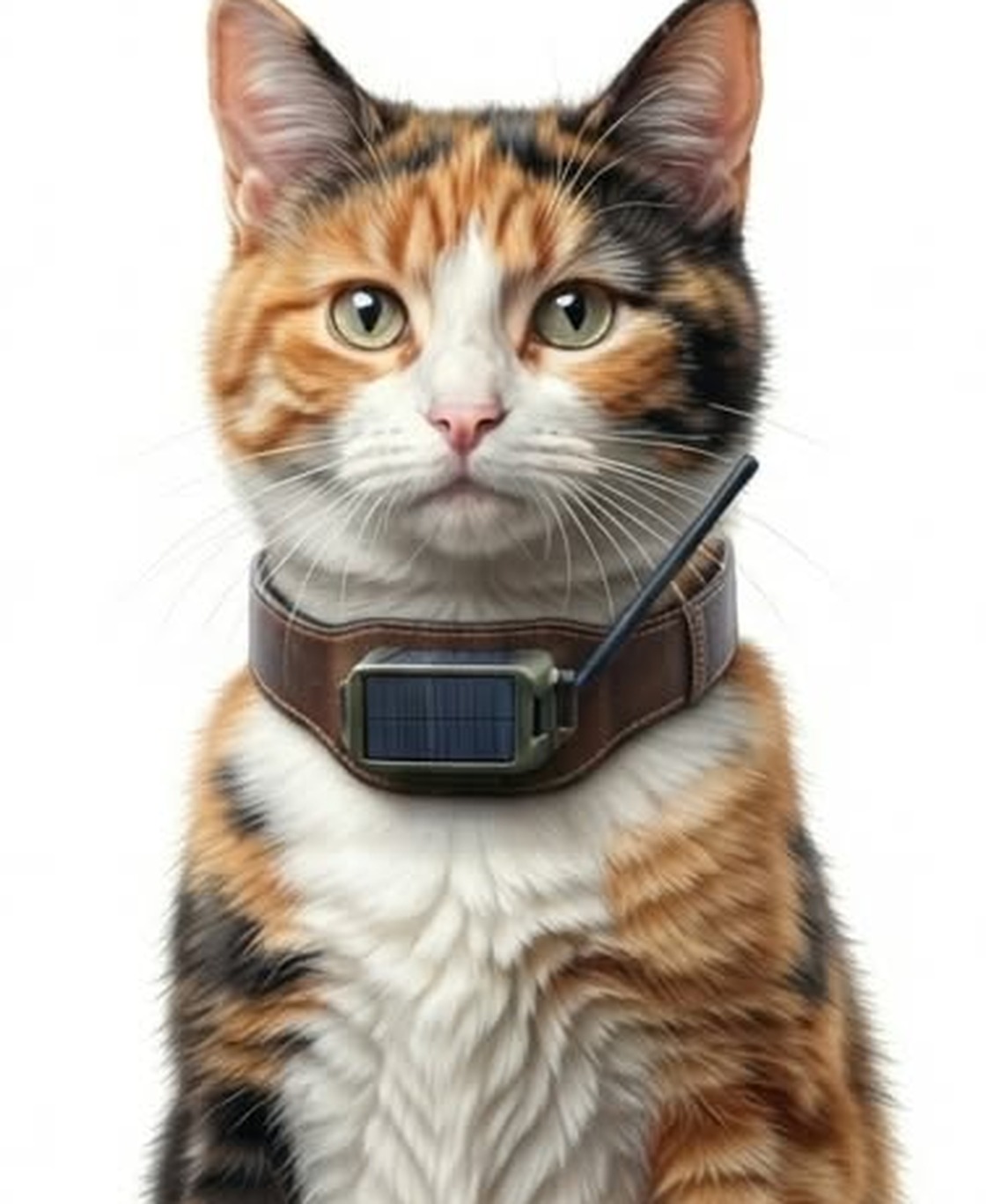
A calico working cat wearing the Cat City breakaway LoRa collar A tabby working cat standing up in the Cat City breakaway LoRa collar
Cat City · the colony mesh

Every one of these cats was on a kill list.

Feral cats can't be adopted, so a shelter puts them down within days. Cat City fixes them, collars them, and puts them to work. Scroll — she's wearing it.

The collar

30 grams. Breakaway. Talks to the whole city.

A Meshtastic LoRa node on a breakaway collar — snaps under load, so no snag can hurt her. GPS, a climate sensor, a tiny vibration motor. $0 a month, no tower, no cell plan.

Trap · neuter · track · return

Fix 80 % and the colony ages out on its own.

Below that line they out-breed you. Above it, births stop and an outdoor colony ages out in about twelve years — no round-ups, no euthanasia, and a count the council can check.

Recall

Buzz means food. The cat comes home.

Three weeks of buzz-before-food and she walks into the feed station on command — battery swaps and vet checks with no re-trapping. Litter at the base station earns a treat. They learn it fast.

Second shift

Safety first. Oh — and we moved the fam here.

A colony in a bad spot — a highway edge, a demolition lot — moves as a family to a safer site, and the collars mean nobody gets lost in the move. Where they park at 3 AM is where the rats are; heat, air and a ground-floor radio map ride along. Meet the night shift.

Working cats

A yard with a working cat has no rats. Ask any warehouse.

Sterilized, vaccinated, collared, placed with a host who feeds them. Breweries, logistics yards, grain stores, city corp yards. Every working cat was on a shelter's kill list the week before.

Fair warning

Cats don't line up for it either.

The pigeons sign up by the dozens. The deer would rather not. The cats show up for the buzz and pretend the whole thing was their idea. That's fine. That's the data.

One mesh · three couriers

Check out Cat City.

Breakaway collar · 30 gsnaps under load — no snag can strangle a cat
LoRa 915 MHz · Meshtastic$0 / month, open-source firmware
GPS + climate sensorfix every 15–30 min when moving
Vibration recallbuzz = food = come to the station
scroll
Cat City · by Artificial Mind Hive · PidgeyFLok and AntlerFlok are its programs

One program that empties a city of strays and rats. Humanely, legally, with numbers the council can check.

Fix and track the outdoor cats on a $0/month LoRa mesh, put pigeons on the roofs and receivers on the chimneys, map every rat burrow and hand it to a licensed operator, run the clinic out of a warehouse the city already owns, and staff the whole thing through the city's own job programs. The scale: an estimated 30–40 million unowned, free-roaming cats in the United States (Alley Cat Allies / peer-reviewed population estimates), about 3.2 million cats entering shelters every year and roughly half a million of them euthanized (ASPCA) — and every city is paying for it today with no map. This is not another program that manages the problem forever. It is an end to it: fix past 80 % and the stray population stops breeding, then ages out naturally over the years, every cat that can be a pet is listed for adoption — we list them, we help the adopters, every cat gets the chance — and every cat still fit to work goes to work for us on a yard that needs it. Tracked, counted, humane — and finished. Every piece has its own page.

$43k
90-day pilot, city cash (≈ $75k all-in: labor, training, boarding, surgery, margin)
$600k
per city per year, priced to finish ($520k with a city building)
$102
per tracked animal per year vs ~$1,400 at the shelter
$0/mo
915 MHz LoRa mesh, no plan, no tower
A calico community cat standing upright wearing a collar with a solar tracker node
The pet layer · Petfindr by AMH

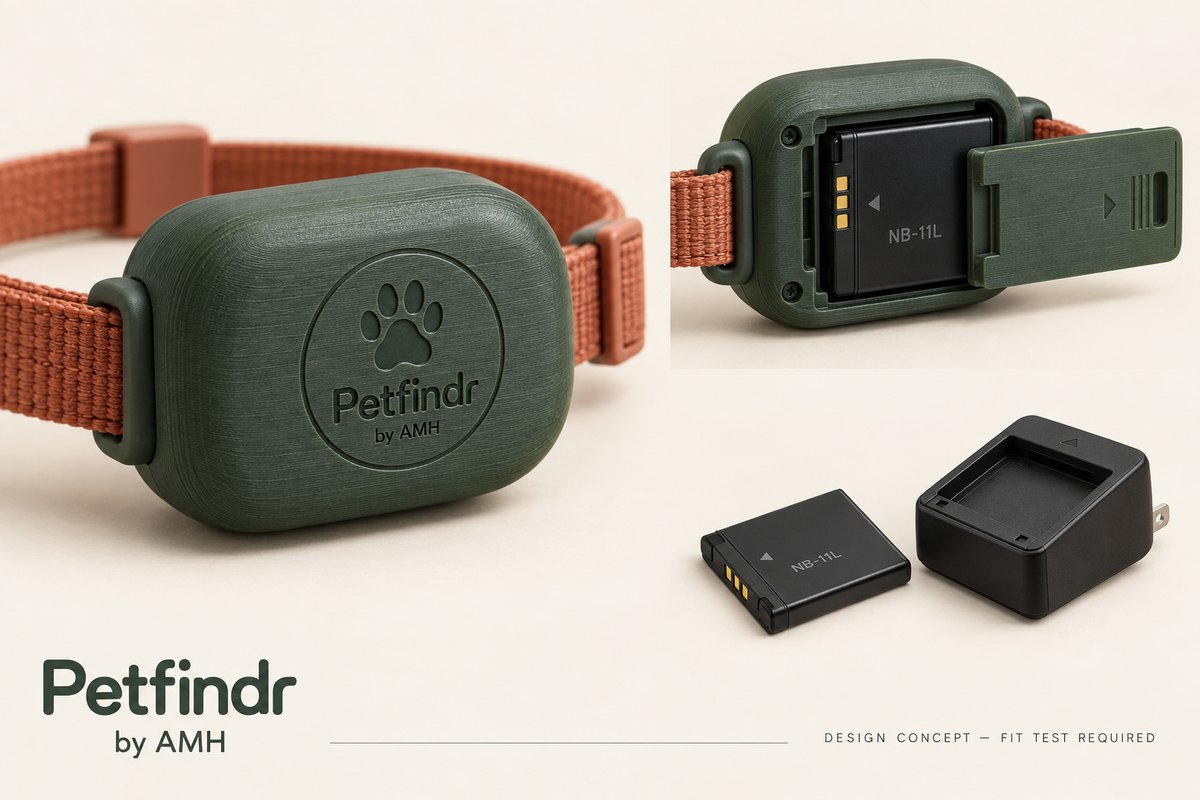
Petfindr: the same collar, on your cat.

The colony collar has a consumer twin. Petfindr is a 30-gram LoRa tag on a normal collar — no cell plan, no subscription — and every Cat City node, pigeon and drone in town is already listening for it. Your cat wanders; the mesh says where. Pet owners fund the network the strays ride on. And no — you don't have to tag the silly ones (the pigeons, the deer, the bear). Your own cat sits for it. Mostly.

Petfindr collar tag by AMH — a green LoRa beacon on a rust-orange collar, battery door open, with the charging cradle
Cat City

The city has cats. Now it has a map.

Every city funds stray-cat control today. None of them can see the result. Cat City is the map, the mesh and the crew that makes the number go down.

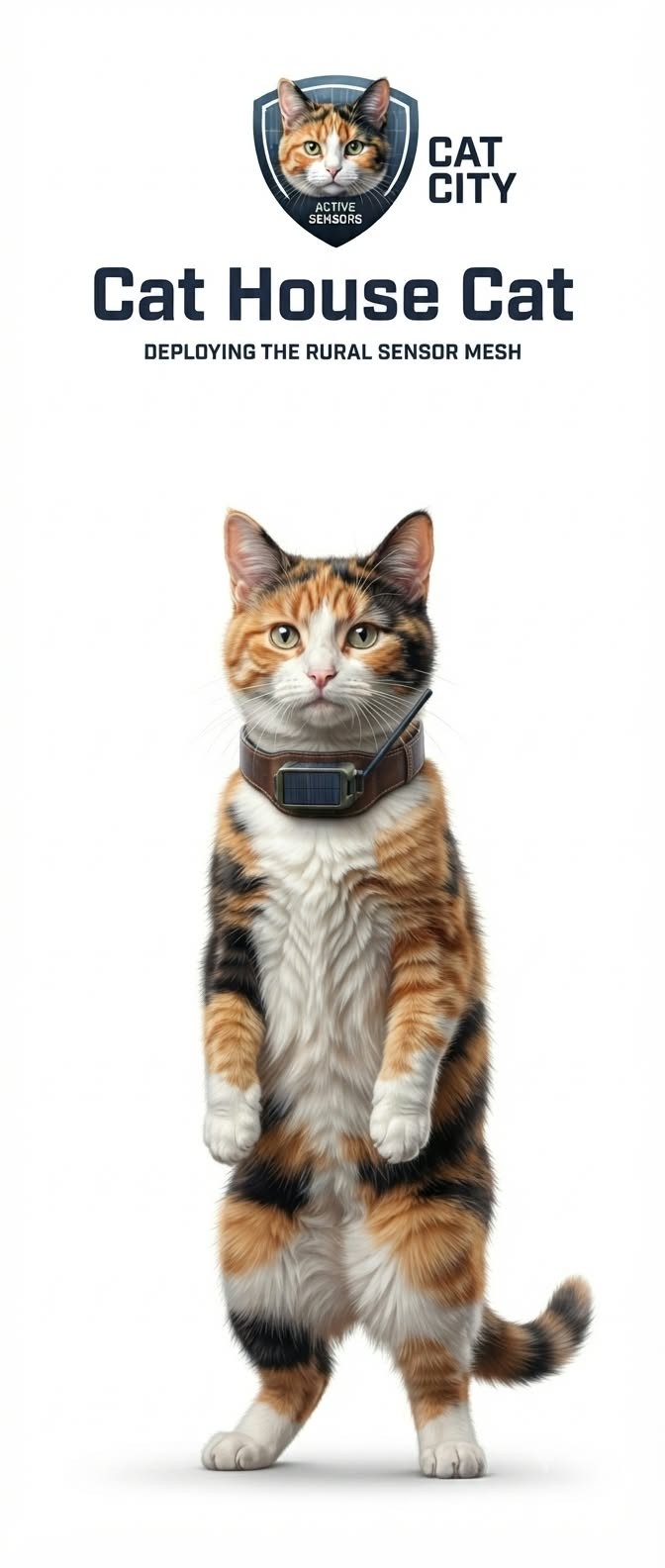
Cat House Cat: a calico with a collar node, with the Cat City shield
And another

Every cat we fix gets a collar and a name on the map.

Ear-tip is the ID, the collar is the radio. Breakaway only. Buzz-before-food means we never trap the same cat twice: we call it.

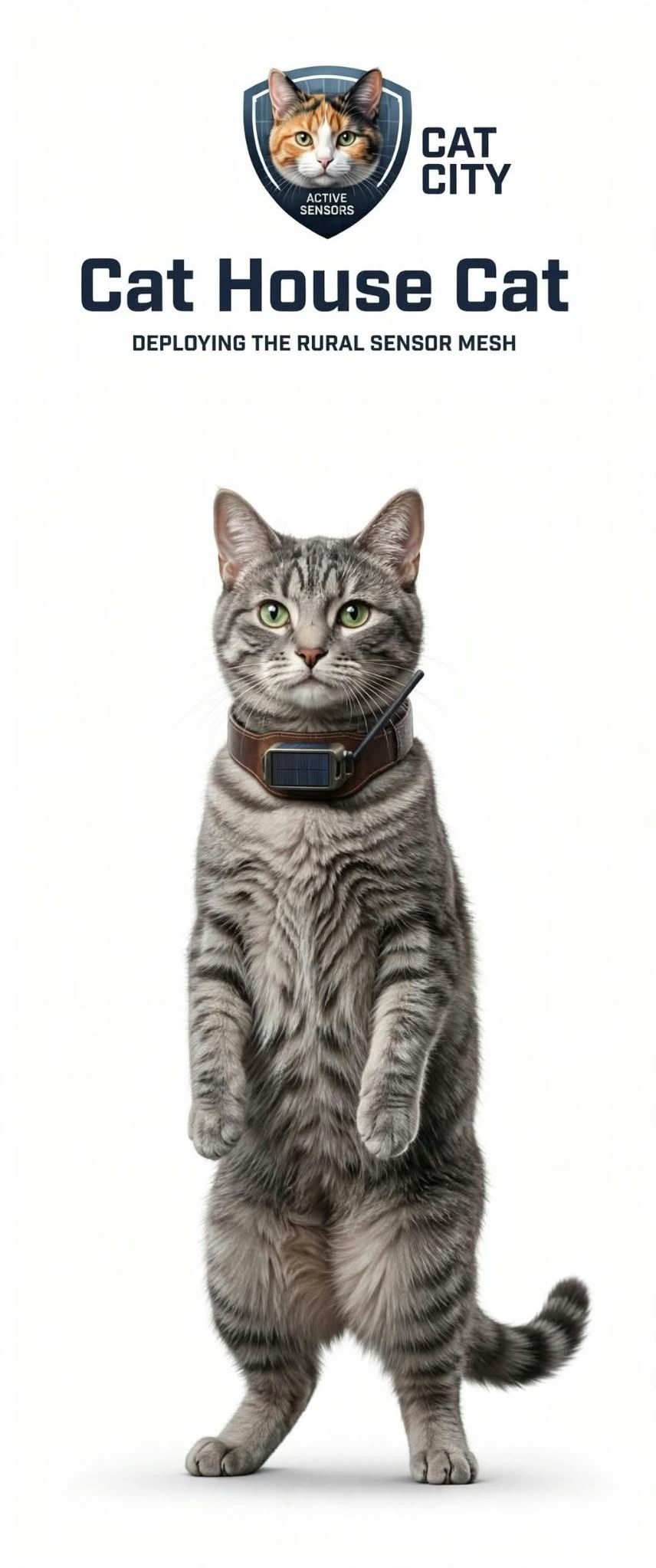
Cat House Cat: a grey tabby standing with a collar node, with the Cat City shield
Close up

The collar is the whole product.

Breakaway strap, a solar strip, a LoRa radio the size of a thumbnail, a buzz motor for recall. Under 30 grams. It talks to every other collar, every pigeon and every chimney box in range.

Close-up of the collar node on the cat
All of them

A colony is a network.

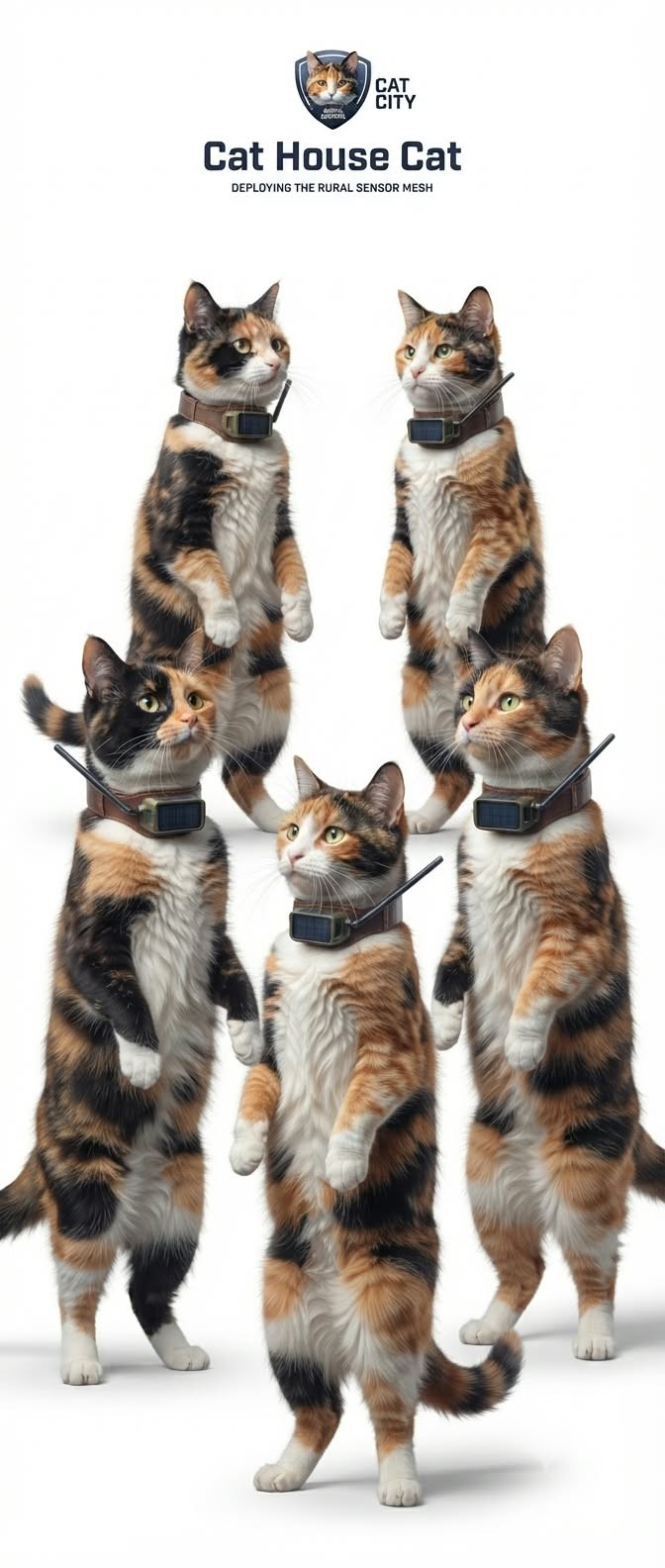
Five cats is a mesh. A thousand is a city that can see itself. Every collar relays for the others, so the map fills in from the edges.

Five calico cats standing, each wearing a collar node
01 · Cats

Cats take the streets.

Tracked TNR colonies at street level, breakaway collars, buzz-before-food recall so no cat is ever trapped twice. The layer the city pays for, because it is the one that ends the problem.

The cat program →

Street, roof and sky layers of the mesh
02 · Rats

Rats get mapped, then handed off.

Thermal drone sweeps find every burrow. A licensed operator eliminates; working cats and re-sweeps keep it empty. Chicago spends $12.5-14.9M a year losing this fight.

The rodent program →

Rodent budgets compared
03 · Pigeons

Pigeons hold the roofs.

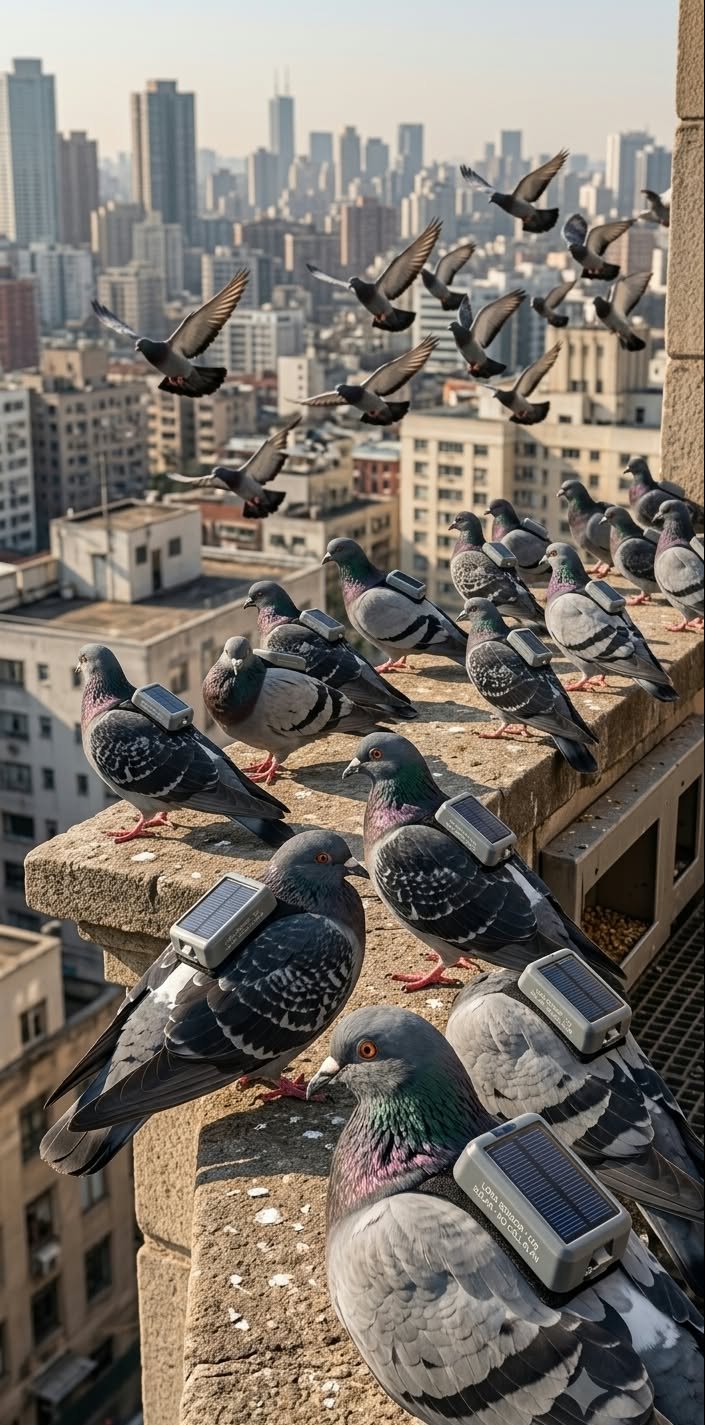
Owned club birds with 15-gram solar nodes on the ledges cats cannot reach. Three thousand per city, a relay blanket nobody can switch off.

PidgeyFLok →

Tagged pigeons on a rooftop ledge
04 · People

People get the jobs and the text.

Caretakers, field techs and builders hired through the city's own programs; a free text network on Lifeline phones for the unhoused; pet food and basic care for owners who need it; every cat we find adoptable.

The four programs ↓ The studies

The data the collars collect
Any city with cats, rats and rooftops · $0/month mesh
The four programs

Pick the page you need. Each one stands on its own.

Collared working cats standing in a row
🐈 Cats

Fix, track, recall

TNR + tracking pilot + a report the council can vote on. Breakaway collars, vibration recall, ear-tip ID, litter stations. Cats →

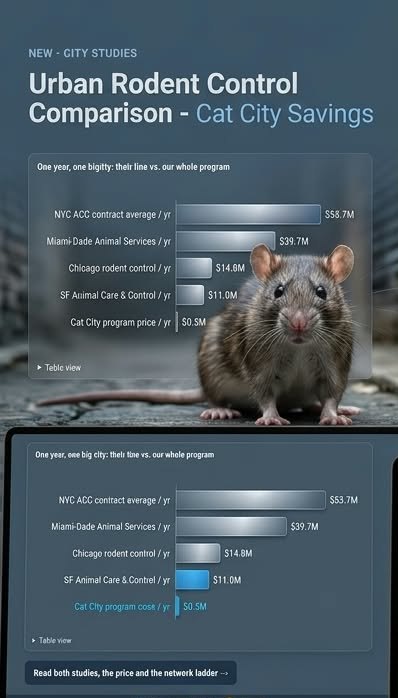
Urban rodent control comparison — the Cat City savings chart
🐀 Rodents

Map · verify · treat · hold

Thermal drone night sweeps, licensed treatment subcontracted, working cats and re-sweeps. Rodents → · Thermal · Contracts

Tagged pigeons on a rooftop ledge with the city behind them
🕊 Pigeons

The rooftop layer

12-15 g solar tags, a loft that feeds and checks them, the math on 3,000 birds per city. Pigeons → · PidgeyFLok

Cat House Cat — the hub that holds, trains and neuters
🚐 Clinic

Vet students, a DVM, a warehouse

Final-year students earn surgical hours fixing colony cats under a supervising DVM; basic shots and treatment for every animal. Clinic →

A calico cat in the Cat City collar, close up
🍽 Care

Training, feeding, daily care

Crate acclimation, buzz-before-food, the daily/weekly/monthly schedule, pet food for owners who need it. Care →

The roles, hours and who pays
💵 Budget

Staff, employees, who pays

Every role, its cost and its funder: animal grants, workforce grants, sponsors, the city. Budget → · Careers

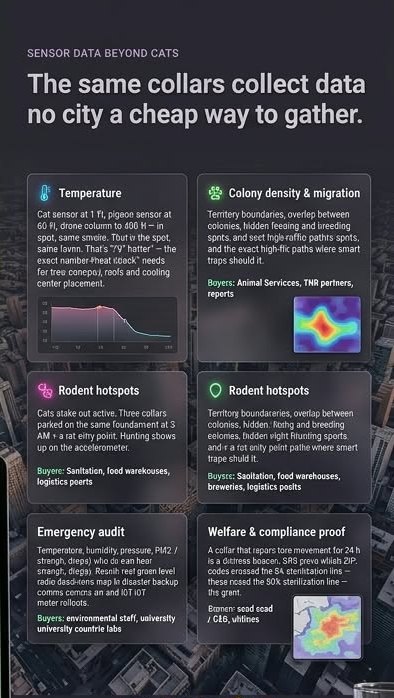
The same collars collect data no city has a cheap way to gather
📡 Data

What the mesh collects

Ground-to-roof temperature, air, rodent hotspots, RF dead zones, welfare alerts. Data →

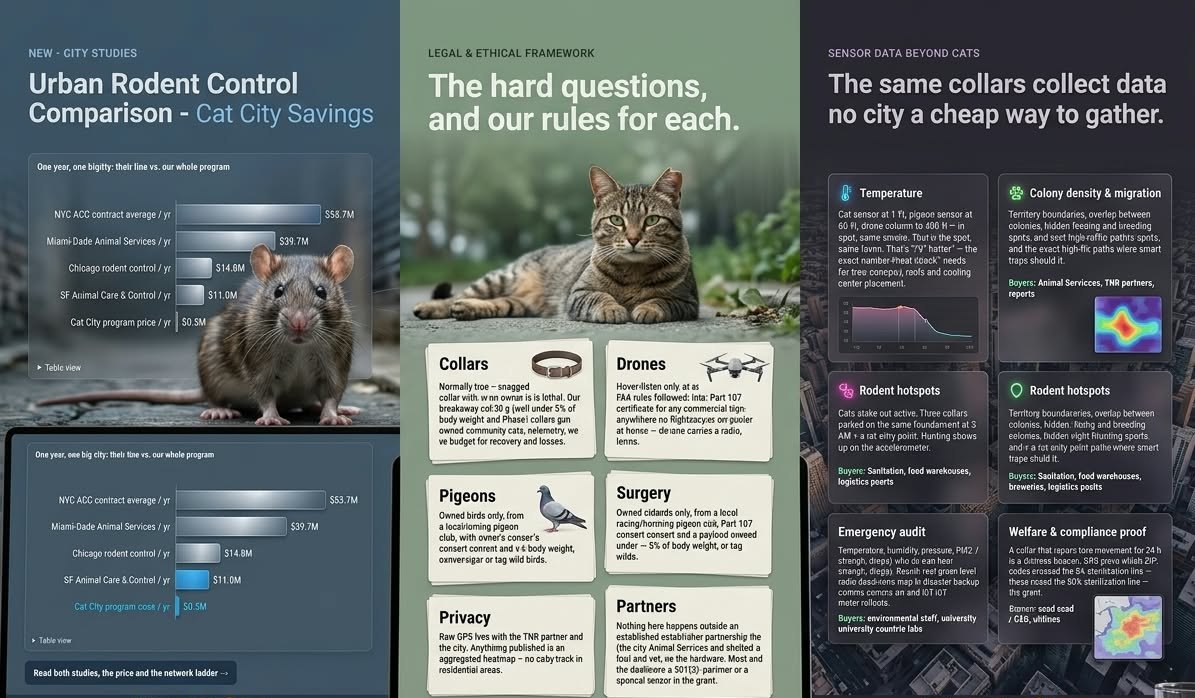
City spend comparison, the rules card and the sensor data products
📊 Studies

What cities spend vs. us

NYC $53.7M/yr, Miami-Dade $39.7M/yr, Chicago $14.85M/yr on rats, SF $11M/yr, the cities' own numbers, charted. Studies →

Cat House Cat — staffed through the city programs
👷 Jobs

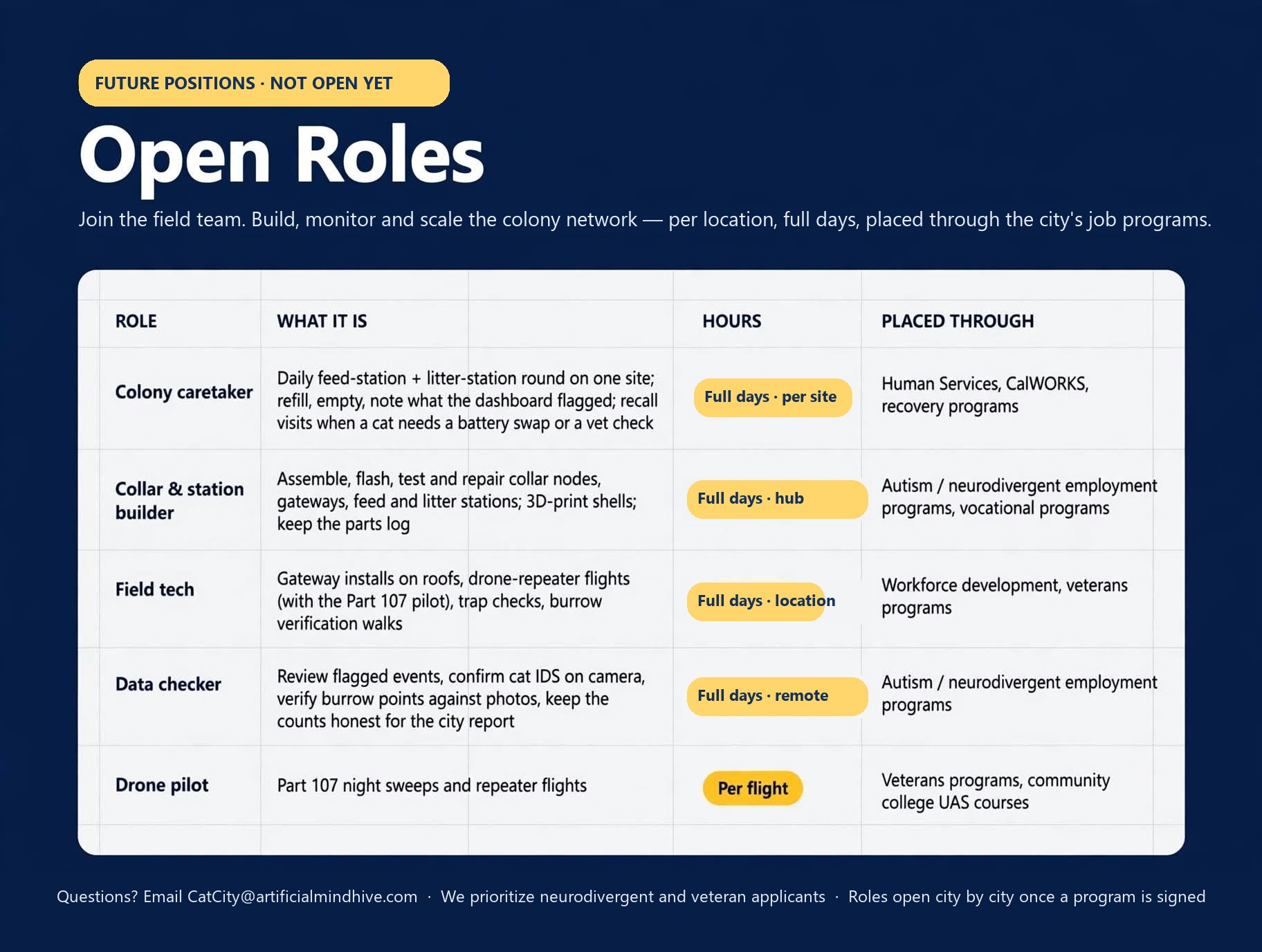
Staffed through city programs

Caretakers, builders, field techs, data checkers through Human Services, CalWORKs, recovery and neurodivergent employment. Jobs →

The mesh

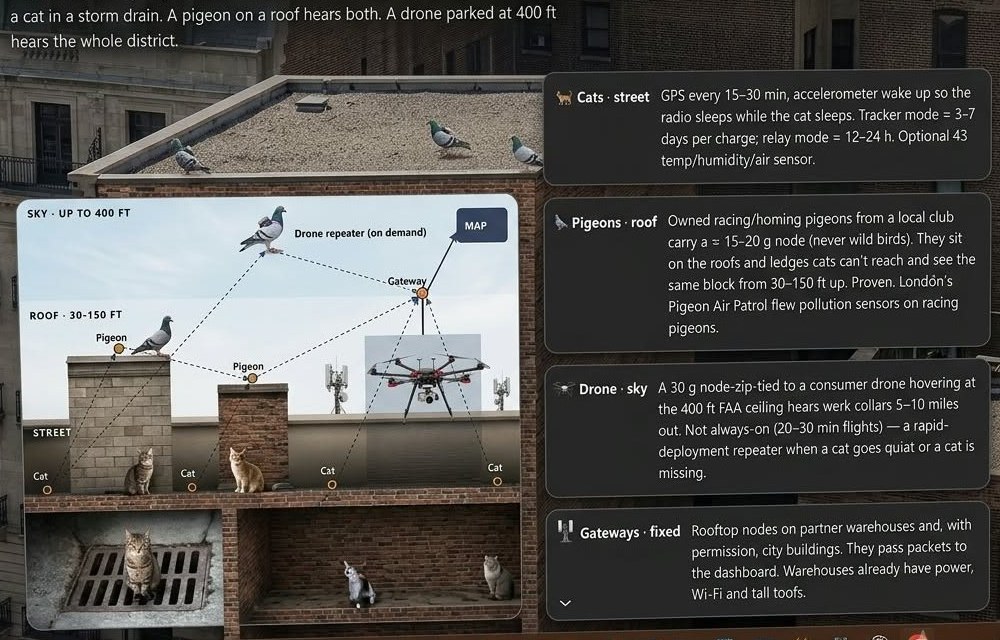
Street, roof, sky: one free network the animals build for you.

Every node relays for every other. A cat in a storm drain reaches a cat on a fence; a pigeon on the ledge hears both; a chimney receiver on Wi-Fi puts it on the map; a drone parked at 400 ft hears the whole district.

1PigeonsRooftop relay blanket. $15 nodes.
2CatsTracked TNR colonies. The city pays for this layer.
3PetsPetfindr collars. Consumer revenue.
4PeopleFree text network on Lifeline phones + a $15 pocket node.
5ServicesAppointments, benefits, shelter beds, SOS to outreach, pet food.
6The city4,000-point sensing; outage-proof messaging.
Sky, roof and street layers on one dashboard
The whole network in one picture. Concept render.
Numbers

Cities already spend eight figures a year on the animals. Cat City costs about one percent of that, and it ends.

New York's shelter contract averages $53.7M a year; Miami-Dade Animal Services is $39.7M and holds 500,000 stray cats "steady"; Chicago spends $12.5-14.9M a year on rats and its own audit says the plan is unlikely to work; San Francisco runs Animal Care & Control on $11M. Targeted, tracked TNR has a published end-state: intake down 66 %, euthanasia down 95 % in two years in the treated area.

Read both city studies →

Sources on the studies page: NYC Comptroller 2025, Miami-Dade FY23-24 adopted budget, Block Club Chicago / The Center Square, SF Chronicle, Levy et al. 2014.

One year, one big city: their line vs. the whole program
NYC shelter contract / yr$53.7M Miami-Dade Animal Services$39.7M Chicago rodent control$14.9M SF Animal Care & Control$11.0M Cat City program$0.60M Blue = the city's own published budget line. Orange = us.
Our cost · what we charge · why it ends

Priced to finish, not to continue.

Pilot · 90 days

$43,000 city cash

≈ $75,000 all-in with labor, training, boarding, surgery and margin. 20 collars, 5 gateways, one colony, a TNR partner, a caretaker on it every day, and a report the council can vote on. Every line item →

City program · per year

$600,000

1,000 tracked cats, 3,000 pigeon nodes, 50 gateways, the map, the monthly report, a warehouse that holds, trains and neuters on site. $520,000 if the city lends an unused building.

Per animal · per year

$102

Fully loaded, warehouse included. The shelter line works out to ~$1,400 per animal handled. We are not competing with the shelter; we make it smaller.

The full cost and price page → Staffing & budget →

Cities & shelters

Start with the 90-day pilot

A letter of support, an intro to Animal Services, one city roof for a gateway, and the name of the grant program. Have an unused building? Lend it as the hub and the price drops.

Businesses

Host cats, a gateway, or both

Warehouses, breweries and logistics yards: working cats against rats, a chimney receiver on your Wi-Fi, a dashboard for your block.

Adopt · foster · work

Every cat we find can go home

Kittens, friendly strays and surrenders are neutered, vaccinated, chipped and socialized at the hub, then adopted through the partner shelter. Adopt → · Careers →

amh@artificialmindhive.com The full hub (12 pages) →

Petfindr collar tag by AMH — a green LoRa beacon on a rust-orange collar, battery door open, with the charging cradle
The pet layer

Petfindr: the same collar, on your cat.

The colony collar has a consumer twin. Petfindr is a 30-gram LoRa tag on a normal collar — no cell plan, no subscription — and every Cat City node, pigeon and drone in town is already listening for it. Your cat wanders; the mesh says where. Pet owners fund the network the strays ride on.

Check out Petfindr Little adventures. A way back home.
The mesh

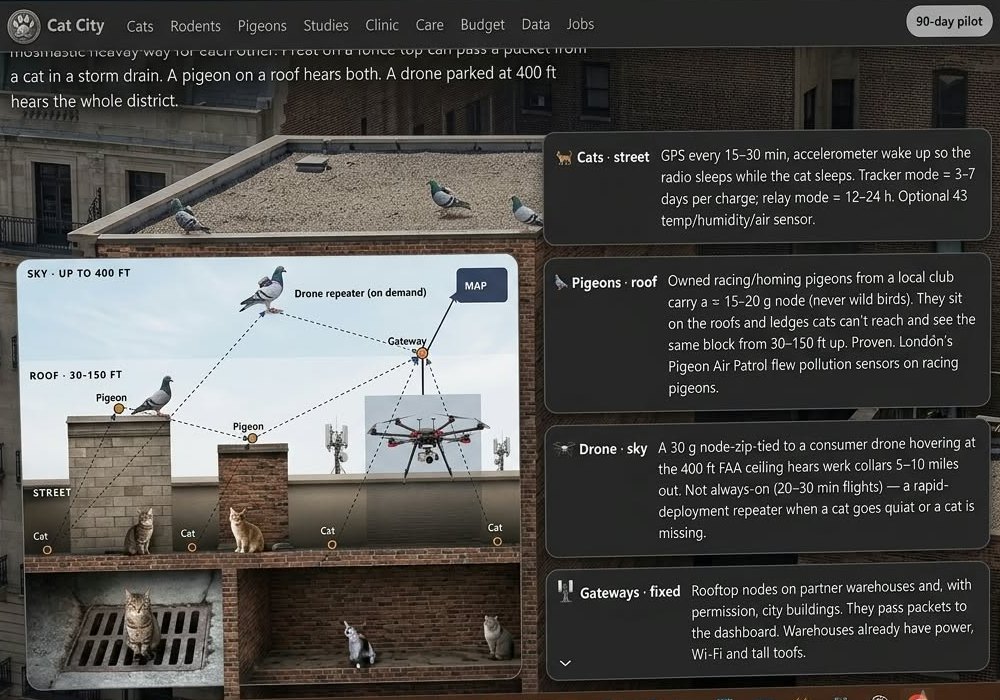
Street, roof, sky: one free network the animals build for you.

Every node relays for every other. A cat in a storm drain reaches a cat on a fence; a pigeon on the ledge hears both; a chimney receiver on Wi-Fi puts it on the map; a drone parked at 400 ft hears the whole district.

1PigeonsRooftop relay blanket. $15 nodes.
2CatsTracked TNR colonies. The city pays for this layer.
3PetsPetfindr collars. Consumer revenue.
4PeopleFree text network on Lifeline phones + a $15 pocket node.
5ServicesAppointments, benefits, shelter beds, SOS to outreach, pet food.
6The city4,000-point sensing; outage-proof messaging.
Sky, roof and street layers on one dashboard

Sky, roof and street layers on one dashboard. The whole network in one picture. Concept render — tap to open full size.

Why it holds together

The collars, gateways and drone that track cats are the same nodes that log rat hotspots, air quality and radio coverage. Sterilized working cats plus mapped, licensed burrow treatment replaces broadcast rodenticide. One day-90 packet — colony count, sterilization %, burrow before/after, heat data, jobs placed — for one council vote.

Who's behind it

Artificial Mind Hive is a California software shop already running computer vision and edge infrastructure in production. The founder has watched these colonies work parks, lots and warehouse yards for 30 years.

Start the 90-day pilot